Restoration company SEO built for urgent demand and researched decisions.
The two demand speeds, the architecture, and the boundaries that hold
Service-business search has been Digital Reach’s work since 2016, and restoration is one of the least forgiving corners of it. This page is restoration company marketing in full: the two speeds restoration demand runs at, the architecture that serves both, the credential and insurance boundaries a restoration site has to hold, and the intake measurement behind all of it.
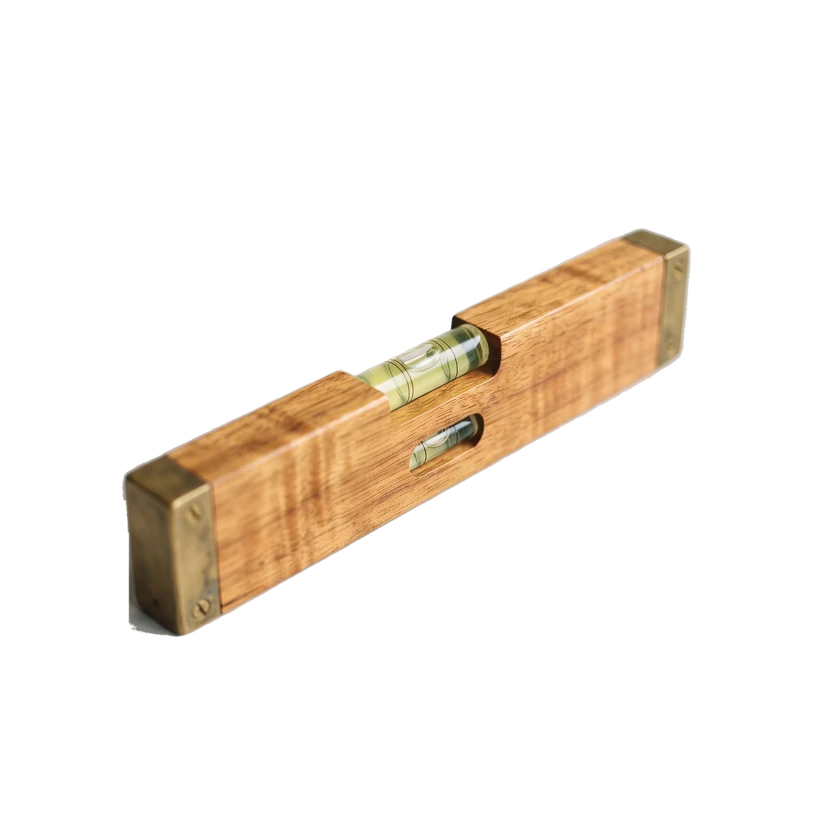

What restoration company SEO from Digital Reach covers.
SEO for restoration companies is the system that makes a restoration business findable and reachable in both demand lanes: service and location architecture for the work it genuinely performs and the areas it genuinely serves, local visibility through a real Google Business Profile, credential and proof surfaces a buyer can verify, and intake measurement that follows an inquiry to a written outcome. Restoration marketing is the wider frame around it. Digital Reach builds and runs the search side month to month, measured on qualified, serviceable inquiries that reach a real intake path.
It is not one template. Someone standing in a flooded unit and a facility manager comparing remediation scopes read different pages, at different speeds.
Who this page is for
- Restoration company owners whose site was written once and never matched the work.
- Marketing and operations leads deciding whether to run this in-house or hire it out.
- Independents and franchisees weighing what they actually control on their own site.
Two demand speeds, running at once.
Restoration demand arrives at two speeds on one site, and building for either speed alone breaks the other. One lane is urgent: an owner or facility manager needs to know whether you serve their address and their loss type. The other is research — scope, credentials, testing and clearance, commercial capacity, documentation.
Those two speeds pull the same pages in opposite directions. The urgent lane needs immediate service fit, real staffed hours, a precise area and one obvious contact path. The research lane needs depth, and more than one route to a person.
Nobody can hand you the split for your market, and this page publishes no rule about how fast anyone searches or picks up a phone. It states one rule instead: a ranking is not a win if the business cannot truthfully serve the query.
What each lane is measured by
- Urgent lane: a serviceable inquiry that reaches a real intake path, then qualified, then booked, on your written definitions. Call counts are activity.
- Research lane: which pages and queries assisted, whether the visitor came back, and the status your CRM shows for that record. Attribution is directional, never exact.
Six demand modes, and what each changes about the site.
Six modes cover most restoration books, and each changes something structural: what people type, what the page must prove, and the boundary on each. Write only the modes the company genuinely performs — a mode published because it ranks is one you will be declining on the phone.
The standards map is public. Current IICRC editions include S500 for water at its 5th edition (2021), S540 for trauma and crime scene at its 2nd (2023) and S700 for fire and smoke at its 1st (2025), checked in 2026 — with S500 under revision, S540 assuming an authority has released the scene, and S700 excluding comprehensive wildfire and rebuild scope. Standards are not licenses, and citing one is not proof a company follows it.
| Mode | What people search | Page treatment | Boundary |
|---|---|---|---|
| Water and flood | Leaks, sewage, extraction, drying. | Source, service and area paths with simple contact. | Not every water loss is an NFIP flood. No page promises drying, salvage or coverage. |
| Fire and smoke | Stabilization, board-up, soot and odor. | Separate stabilization from any rebuild scope you hold. | The fire and smoke standard is not comprehensive wildfire or rebuild scope. |
| Mold | Inspection, testing, containment, clearance. | Inspection and remediation stay distinct pages. | No medical claim, no fear copy, no removal promise. |
| Storm | Wind, intrusion, openings, debris, repair. | Publish current area, staffed hours and real capacity. | No mobilization promise and no forecast. A spike is not capacity. |
| Biohazard | Trauma and crime scene, infectious material. | Restrained copy, specific training and disposal scope. | No detail about any person, property or event. The trauma standard assumes an authority release. |
| Residential vs. commercial | Next steps on one side; capacity and procurement fit on the other. | State both capabilities separately and truthfully. | Residential proof does not establish large-loss capacity. |
This is the agency’s map, not a consumer guide, and it gives nobody instruction about a loss. Water damage restoration marketing and mold remediation marketing are demand modes inside one program — the per-peril pages belong on your site.
The tree, and the gate every page passes.
The shape below is an example, not a template. Service pages for work the company actually performs; location pages only for real staffed locations and areas it genuinely serves; commercial and large-loss pages where that capability exists; project, proof and credential pages; then research content and FAQ. Under that sit the profile, reviews and citations, then the technical layer.
Platform rules set the floor here, not a ranking theory. Google’s representation guidelines describe real eligible locations and reject virtual offices; service-area guidance covers businesses that travel to customers; the review policy prohibits incentives, biased solicitation and suppressing unflattering reviews. Google’s own local ranking factors are published too. These are eligibility and conduct rules, cited as rules — not a claim that any causes a ranking.
Page count is not what makes this tree trustworthy; a gate in front of it is. Nothing about a peril, a service or an area gets published until all four of these are true:
- The company genuinely performs it, and would take the job tomorrow.
- It genuinely serves that area today, with crews and trucks that can get there. A town on a map is not a service area until a truck can reach it.
- It carries unique facts an operator has read and approved.
- It answers a distinct need no existing page answers.
A page failing any of the four gets consolidated. Three things never make it: a peril-by-city matrix stamped across places nobody works, the pattern known as doorway pages; a promised number of pages or posts per month, which sells activity; and a profile name stuffed with keywords, or hours nobody staffs. Structured data describes what a page already says — it does not cure an untrue claim. For contractors whose work is not loss response at all — general contracting, new construction, the trades around a rebuild — the general contractor and construction SEO page is the one to read instead.
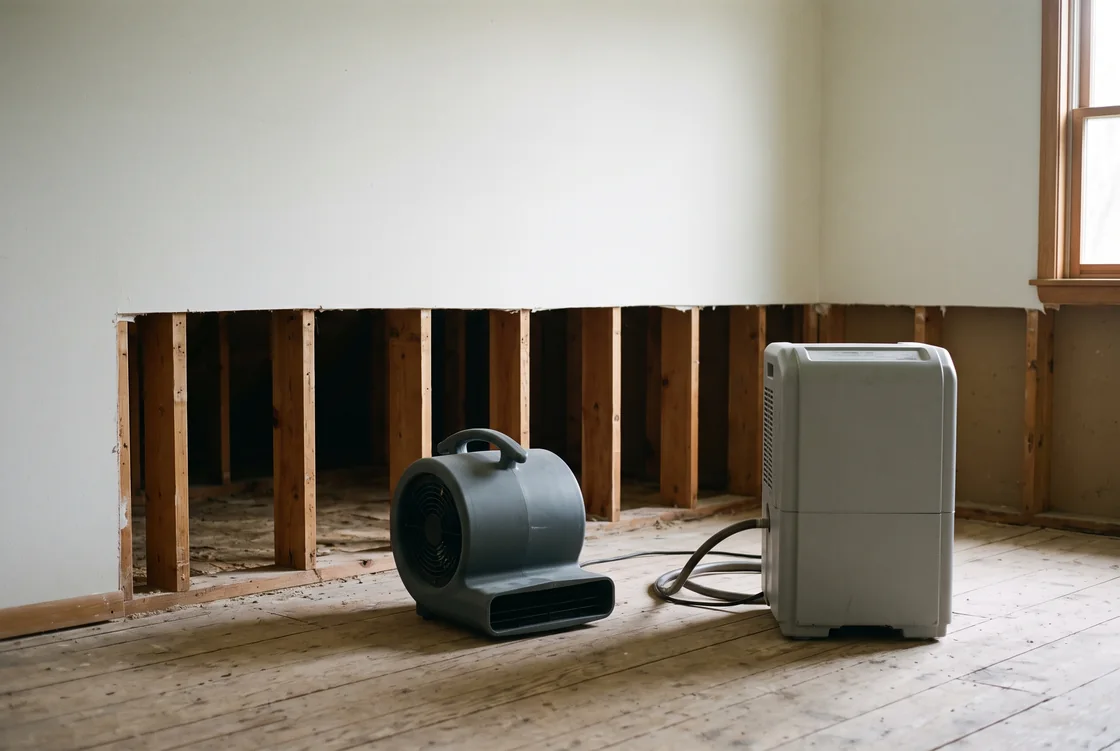
Intake is where marketing stops.
The chain is short and every link is checkable: source, query and landing page, then a call or form, then a person who answers, then serviceability and loss-type qualification, then qualified, booked, and won or lost with a reason code.
The owner’s cell, a trained intake desk, an answering service and a voicemail box are four different promises to whoever is standing in the water; publish only the one that is true. Attribution here is directional and nothing more — cross-device research, adjuster and plumber referrals and walk-ups all leave gaps — so the unknown bucket stays in the report. You define qualified, booked and won.
Ten yes-or-no questions about your own operation. None asks about a customer, an address or a loss:
- You can name the perils and services your company performs, and the ones it declines.
- You can name the geographies your crews can genuinely reach today.
- The hours you display match a real staffed intake path.
- You know who answers a call in staffed hours, and what happens when nobody picks up.
- Residential and commercial capability are stated separately, and both statements are true.
- Every published credential is current, verifiable, and correctly attributed to the firm or the technician.
- You own your website and your Google Business Profile, and you know what a franchisor must approve.
- Program or TPA relationships, where they exist, are current, permissioned and precisely described.
- Qualified, booked and won have written definitions, and lost inquiries get a reason code.
- You hold permissioned, privacy-safe proof your company is able to publish.
The restoration-readiness scorecard.
Ten yes-or-no rows, each about your own operation rather than any customer or loss. Tick the ones that are true today — the count says whether a campaign has something to grip. This is a marketing-planning aid, not advice about any claim.
Ten yes-or-no questions about your own operation. None asks about a customer, an address or a loss:
0 of 10 readiness rows true today
Settle the basics first
A campaign is premature. Most of these are operating decisions, not marketing ones – settle the perils, the real service area, the staffed hours and the intake path first, because visibility amplifies whatever operation already exists.
No name, email or phone number is asked for anywhere in this worksheet. The only thing sent is an anonymous analytics event carrying the tick count and the band — never a customer, address or loss — and the worksheet resets when you leave the page. Print it or take a screenshot if you want to keep it.
The line marketing does not cross.
Restoration work sits next to insurance, and marketing has to sit beside that without stepping into it. Digital Reach is a marketing provider — not an insurer, an adjuster, a claims representative or a coverage attorney. Direct, commercial, referral and program work are four acquisition journeys.
Two primary sources draw the line. NFIP's claim guidance says the adjuster prepares the damage estimate, and advises policyholders to speak with an agent or adjuster before signing a cleaning or maintenance contract. The Restoration Industry Association's TPA position statement describes TPAs and managed repair networks as administrators operating through service-level agreements and network referral fees — an association position, not law.
| May accurately say | May not say without specific legal authority and evidence | Why |
|---|---|---|
| The documentation process the contractor genuinely runs. | That anyone decides what a policy covers, or reads a policy for the insured. | Coverage is decided under the policy, not on a website. |
| The licenses, work authorizations, drying logs, estimates and photos actually produced. | That the company can shift an adjuster's decision or act against an insurer. | Regulated roles. A marketing page is not one. |
| That any program relationship named is current and permissioned. | That a TPA relationship produces assignments, volume or payment. | A network agreement is an arrangement, not a supply of work. |
Assignment-of-benefits and direction-to-pay language gets one sentence: it is jurisdiction-specific and goes to a lawyer first. No carrier, TPA, franchise or certification mark is displayed as an endorsement.
Coverage is decided under the policy, not on a website — and no page promises drying, salvage or coverage.
Credentials, verified one record at a time.
A Certified Firm and a Certified Technician are two different things, and a site that blurs them makes a claim it cannot support. IICRC — the nonprofit Institute of Inspection, Cleaning and Restoration Certification, not a government license — reports more than 49,000 active Certified Technicians and more than 6,500 Certified Firms worldwide, a live worldwide figure supplied by the certifying body in 2026 that proves nothing about whether any one firm or technician is current. The IICRC locator settles that, one record at a time. Neither IICRC nor RIA, a separate association, is a Digital Reach credential.
The competitive set is blurrier than it looks. The Census counted 5,826 employer establishments in NAICS 562910, Remediation Services, in its 2023 County Business Patterns — a category that also covers contaminated-site and groundwater cleanup, asbestos and lead abatement, where an establishment is a location rather than a firm, and the count is not a tally of water or fire restoration companies. Context, not a competitor list.
Franchise and independent are different starting positions, not different rules. A franchisee inherits brand demand and corporate approval limits; an independent controls more and starts colder. Neither gets a promise about outranking a brand.
What gets inventoried before anything publishes:
- The standard, the holder, current status, applicable services and the verification URL — firm and technician, separately.
- Written permission for every logo or mark shown, association marks included.
- Who owns the website and the profile, and what a franchisor must approve.
- Which locations are staffed, and which services each one delivers.
Six words that stop blurring into each other.
Six words do most of the damage on restoration sites, because copy uses them interchangeably and scope does not. These are architecture distinctions, not universal legal definitions.
| Term | What it means for content | Boundary |
|---|---|---|
| Restoration | Broad return-to-use category; scope varies by company. | Not always reconstruction, and never a pre-loss promise. |
| Mitigation | Early action to limit continuing damage. | Does not decide coverage or promise nothing worsens. |
| Remediation | Work addressing contamination or a hazard, most often mold. | Not a synonym for every restoration service. |
| Cleanup | Task-level water, smoke, sewage, mold, biohazard or contents work. | Surface cleaning is not automatically complete remediation. |
| Reconstruction | Post-stabilization repair and rebuild, usually trades and permits. | Not offered by every restorer; a certification is not a contractor license. |
| Abatement | Regulated hazardous-material work, jurisdiction dependent. | Do not fold asbestos or lead into mold content. |
Getting quoted when someone asks an assistant for a restorer.
When an assistant is asked which restoration company to call, it assembles a shortlist out of what the web already says about a business. Nothing here can be submitted, bought or placed, and nobody, us included, decides what an assistant says back. Google's structured-data policies are explicit that markup describes a page's own visible content.
- The buyer's own words at the top of the page, not the vocabulary a technician writes a job file in.
- Scoped facts: the perils handled, the areas served, the hours staffed, the credentials held.
- Structure that keeps a paragraph self-contained: the peril, the property type and the area named inside the passage, not three headings above it.
- Loss-level detail — the peril, the structure, the scope actually performed — that a templated service page has no way to invent.
- One name, one address, one number — identical on the site, on the profile, and in every directory that carries the company.
- Off-site mentions that describe the same operation, with the same peril list and the same footprint, as the site.
How Digital Reach runs it.
01
Audit
The site, the profile, the credential inventory, every published claim and the intake path get audited together, because a restoration buyer checks them together. What comes back is one ranked list of problems in priority order, not a menu of services to pick from.
02
Demand-mode and footprint map
Which perils you perform, which areas your crews can reach, which locations are staffed. Coverage on the site never runs ahead of coverage on the ground.
03
Technical and entity foundation
Crawlable, editable, quick on a phone, with one consistent identity across the site, the profile and your directory listings.
04
Content and proof production
Service, area, commercial and credential pages built to the publication gate, with an operator's review before publication. Digital Reach audits marketing claims; it does not verify your licenses, insurance or credentials.
05
Measurement, then iteration
Your own definitions of qualified, booked and won are what the reporting is scored against, on a cadence set at the start. You can end it on 30 days' notice, it bills month to month, and every account involved is in your name. No position ever gets a date attached to it, because no honest date exists; the reasoning sits in our pricing methodology.
Why Digital Reach.
Two counts, kept apart
Digital Reach runs 10+ active retainers right now. Separately, it has worked with over 100 businesses across 10-plus years — a lifetime figure, not a current client list. The two are kept apart on purpose, and no industry breakdown sits behind them, so neither counts restoration companies.
No restoration case study
No permissioned restoration engagement with published results sits behind this page. Borrowing a result from another industry and calling it restoration evidence would not make it evidence. What does sit behind it: strategy written for this vertical, primary sources you can open and read yourself, and agency work in the portfolio — agency proof, never restoration proof.
Founded 2016, senior-led
Founded in 2016, working from 25 Kamaha'o Street, Wailuku, HI 96793 — one base, and the only one, serving local and national clients. Shane Perry, Founder and Lead SEO Strategist, is the person inside your accounts. There is no term to sign out of — month to month, 30 days' notice, and the accounts were never ours to keep. More in about us.
What changes the scope.
No fee appears on this page. A price published before anyone has looked at your perils, your footprint or your intake is a guess, however transparent it looks.
What actually moves the scope:
- The number of markets in play, and how many genuinely served areas sit inside each of them.
- Which demand modes you actually serve.
- Whether residential and commercial capability both need building out.
- The condition of the site and profile you already have.
- How much credential and project proof is ready to publish.
- Whether the intake path already produces measurable calls, forms and outcomes, or has to be instrumented first.
Every one of those inputs, and the sourcing rule behind the numbers it uses, is laid out in our pricing methodology. The planning calculator is not on this page; it lives on the local twin linked below.
Restoration company in Hawaii?
Our home market has a page of its own, and it owns the geography: island service-area logic for a state where one profile cannot be locally relevant everywhere, the licensing and credential verification a buyer checks before hiring, and the planning calculator. None of this page stops applying at the state line: the two speeds, the publication gate, the intake chain and the insurance boundary carry straight across.
Frequently Asked Questions.
Don’t see your question? Call (808) 758-5058.
What is SEO for a restoration company?
The work that makes a restoration business findable, credible and reachable while someone decides who to call: service pages for perils you perform, location pages for areas you serve, a real Google Business Profile, verifiable proof, and intake measurement.
How is emergency restoration SEO different from ordinary home-service SEO?
Two lanes run at once. The urgent lane needs truthful staffed hours, a precise service area and low-friction contact. The research lane — scope, credentials, testing and clearance — is a different buyer reading at the same moment. No inspected source supports a universal rule about answering speed.
Can SEO help an independent restoration company compete with franchises?
It can improve eligible visibility and build local proof a brand cannot inherit for you. What it produces depends on your market, authority, operations, site and profile control, and the competition. Nobody can promise you will outrank a brand.
Should water, fire, mold, storm and biohazard services share one page?
An agency page can summarize them, as this one does. A client site needs a separate page only for a service it genuinely performs, with distinct proof and scope language. Publishing a peril you do not perform produces inquiries you decline.
How do insurance and TPA relationships affect restoration marketing?
They create different audiences, documentation and acquisition routes: direct and retail work, commercial buyers, referrals and program work read different pages. SEO supports all of them, but it does not decide what a policy covers, and a TPA relationship promises no assignments or payment.
What does restoration-company SEO cost, and how long does it take?
No price appears here. Scope moves on markets and areas covered, demand modes served, site and profile condition, proof readiness, and how measurable your intake is; the reasoning is in our pricing methodology. Digital Reach scopes month to month after an audit, with no ranking or timing promise attached. Hawaii readers can run the calculator on the local twin.
Related resources + tools.
Sources
- IICRC — Certified Firm Verification, reporting more than 49,000 active Certified Technicians and more than 6,500 Certified Firms worldwide; a live worldwide figure supplied by the certifying body itself, so it is not a US restoration-company count and not proof that any particular firm or technician is current, which only a record-by-record check in the IICRC Global Locator can establish (fetched 2026)
- IICRC — standards index, the map from peril to standard: S500 water at its 5th edition (2021), S520 mold, S540 trauma and crime scene at its 2nd edition (2023), S590 HVAC, and S700 fire and smoke at its 1st edition (2025); S500 is under revision, S540 assumes an authority release, and S700 excludes comprehensive wildfire and rebuild scope, so a standard is neither a license nor proof that a company follows it (checked 2026)
- US Census Bureau — Remediation Services, NAICS 562910, 5,826 employer establishments; the category also covers cleanup of contaminated buildings and mine sites, soil and groundwater work, reclamation, asbestos and lead abatement, and an establishment is a physical employer location rather than a firm, so it is not a count of water or fire restoration companies and cannot size a market (2023 County Business Patterns)
- NFIP — Start a Claim, stating that the adjuster prepares the damage estimate and advising policyholders to speak with an agent or adjuster before signing a cleaning or maintenance contract; cited here as a process boundary, not as a statement about what any policy covers (2026)
- Restoration Industry Association — TPA position statement, client disclosure, describing TPAs and managed repair networks as administrators operating through service-level agreements and network referral fees; an association position statement rather than law, and not a description of what any particular network provides (2024)
Find out whether this is the right work for your company.
The first call is 30 minutes, free, with Shane personally — a marketing scope call: the perils you perform, the areas you reach, who answers your phone, and what you hold that is publishable.
A bad fit gets named on that call, not discovered later. Founded 2016. Senior-led. Month to month, 30 days' notice. No promised rankings, calls or jobs, and nothing about an insurance result.