
Contractor SEO that attracts better-fit projects.
The demand modes, the system, and what a qualified lead is
Digital Reach has worked from Wailuku, Maui since 2016, running search for service businesses. This page is contractor SEO in full: why a remodeler, a builder, a specialty trade and a commercial firm get found in different ways, and what counts as a qualified contractor lead.


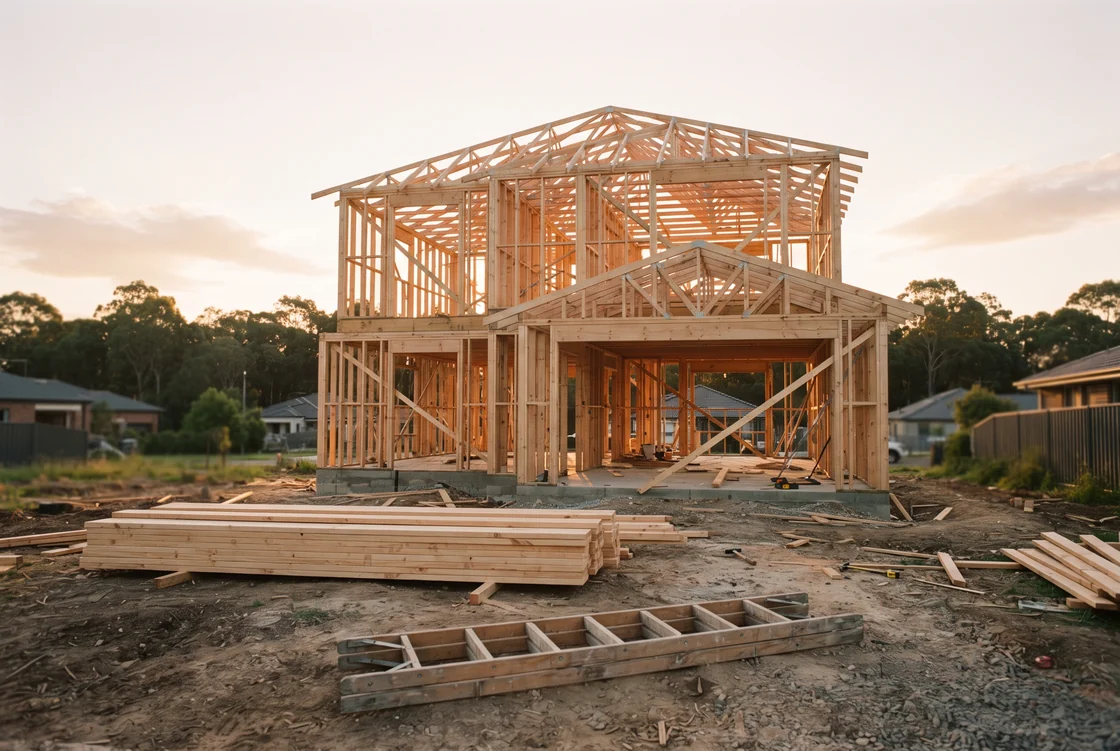
What contractor SEO from Digital Reach covers.
Contractor SEO is the work of making a contracting business findable and credible at the moment someone decides who to call. The measure of SEO for contractors is what reaches the office: better-matched calls, estimates booked, bids invited, contracts signed — never a traffic chart, and never a promised position. Digital Reach runs it as a month-to-month retainer across six workstreams, from service mapping and the Google Business Profile through to tracking back to the query.
There is no single template. The plan changes with revenue model, urgency, geography and capacity, so a roofing company taking emergency calls and a commercial builder chasing a shortlist place need different pages and different conversion events. Contractor marketing is the larger apparatus search sits inside.
Why contractor SEO is different from generic local SEO.
Every local business wants to be found nearby. A contracting business has five variables under that sentence, and a generic local checklist addresses one.
Location is a radius a crew can drive, not a pin on a map. Urgency splits one trade in two: a burst pipe and a planned bathroom remodel are the same plumber and two different searches. Project value and cycle run from a single-visit repair to a phased multi-trade build. Crew capacity is the ceiling — a builder whose trucks are already committed gains nothing from more inquiries, only from better-matched ones. Trust is checked before a stranger enters a house: license and insurance, real photographs, reviews of the same job type.
So the real question is narrower than ranking in a city. It is which searches describe the jobs you want more of, inside the radius your crews already drive, at a volume your foremen can absorb.
The scale number, and its limits
- Census 2023 County Business Patterns, NAICS 23: 814,557 employer establishments in construction (2023 data, released June 2025).
- The caveat: establishments are locations rather than firms, and most nonemployer sole proprietors are excluded. It shows a fragmented field, not an addressable market.
Four contractor demand modes.
Contractor is an umbrella over four buying situations. The playbook changes with revenue model, urgency, geography and capacity, so one template stamped across every trade produces the wrong pages for three of them.
Remodel and renovation
Kitchen, bath, whole-home and addition searches are visual, and the homeowner keeps circling scope, disruption and what the number is made of before anyone gets called. What answers it: one page per project type, explainers on what moves an estimate and how the job runs while people live in the house, and finished-work photography, converting on a consultation. For the residential project-page and consultation path, see our remodeler SEO guide.
New build and home builder
Custom-home buyers arrive through land, design, financing and permitting questions, so the first search often carries no builder vocabulary. What answers it: real build types, project phases and completed homes, converting on a fit call. Custom, spec and production builders should not share a page map.
Specialty trades
Roofing, plumbing, HVAC and restoration firms differ in urgency, ticket size and radius — specialty trades accounted for 5.271 million of the 8.343 million construction payroll jobs in July 2026 (BLS Table B-1), preliminary, and jobs rather than businesses. Urgent and planned-replacement intent need separate pages; the conversion event is usually a call.
Commercial and general contracting
Owners, developers, facility managers and procurement teams shortlist on capability, sector experience, licensing and project history, well before an invitation goes out. What answers it: capability and sector pages, project sheets, and an RFQ route. Search supports shortlist inclusion; it does not decide an award.
Below is the fit screen we run, each line answered yes or no off your own books:
- There is a short list of job types you would rather be bidding, and you know what is on it.
- Past a certain drive time you turn work down, and the office holds that line.
- You hold a floor on contract value and walk away from work beneath it.
- Residential and commercial work are sold, priced and staffed differently here.
- Calls reach a person during business hours instead of a voicemail box nobody clears.
- You have crew capacity for additional work if inquiry volume rises.
- Nobody else holds the keys to your site, your profile, Search Console or the analytics account.
- You hold your own jobsite and completed-work photography, with permission to publish it.
- A single named person signs off on copy and can answer a question about how the work is done.
- You can put a number on what one more signed contract does for the business.
The contractor-fit scorecard.
Ten yes-or-no dimensions, each about your business rather than your website. Tick the ones that are true today — the score says whether a campaign has something to grip.
Below is the fit screen we run, each line answered yes or no off your own books:
0 of 10 rules written down
Start with the definition
Start with the definition. With most of these unwritten, every report about lead quality is really a report about form fills, and nobody can tell whether a month was good.
No name, email or phone number is asked for anywhere in this worksheet, and it resets when you leave the page. Print it or take a screenshot if you want to keep it.
Contractor, general contractor, construction company.
The three terms overlap without being synonyms, and treating them as one keyword set is how a site ends up competing with itself for one query. Contractor is the umbrella; general contractor names the coordinating party on a project, and in many states a license class the state itself defines; construction company reaches wider than either.
| Term | Where it belongs on a site |
|---|---|
| Contractor | The umbrella commercial page sitting above every trade page. |
| General contractor | A scope section, plus a page per project type. |
| Construction company | Capability and sector pages, project sheets, an RFQ route. |
General contractor SEO and construction company SEO are scope decisions inside one discipline, and which fits you is yours to confirm. For the query side, see contractor keyword examples by intent.
The contractor SEO system.
Six workstreams. Sequence comes out of the audit rather than off a standing checklist. No quantities appear in the table, and that omission is the point: committing to a page count or a link count prices effort, and effort is not a signed contract. The workstreams are the same for a roofing company and a commercial builder; what goes inside them is set by the demand mode you sell into.
| Workstream | Deliverable | Your input | How it is measured |
|---|---|---|---|
| Market and service mapping | The trades, project types and areas worth competing for, and the page map. | What you sell profitably, and where crews go. | Coverage of the matching query groups. |
| Google Business Profile and local | One canonical name, address and phone; categories, service lists and hours that match what you actually bid; a citation record. | Owner-level profile access. | Calls, direction requests, profile actions. |
| Service, location and project content | A page for each service and area you cover, plus permissioned project pages. | Signed-off photography, and the job facts behind each project page. | Entry pages, and the inquiries they assist. |
| Technical, on-page, internal links | Crawling, indexing, speed, structured data and internal links ranked worst-first, then shipped fixes. | CMS or developer access. | Fixes shipped, position by query group. |
| Authority and reviews | Citations and coverage you would stand behind, plus a review routine your crew leads will actually follow. | Introductions, and someone who answers reviews. | Referring domains, review volume and recency. |
| Conversion and CRM attribution | Call and form tracking, and the chain from query to booked estimate. | CRM access, or the fields it captures. | Qualified inquiries and booked estimates. |
Two boundaries sit inside that work. Markup only describes what a page already shows: Google requires it to represent the main content, and says valid markup on its own produces no rich result (structured-data guidelines); FAQ rich results were removed from Google Search on May 7, 2026 (Search Central update note), so the questions below are written for the person hiring you, not for a search feature. And if your crews travel to the work, Google's rules are explicit: one profile tied to the central location, service areas listed honestly, no virtual office standing in for a yard, and no keywords packed into the business name (representing your business, service-area guidance).
What is not in the table: a fixed count of links or pages per month, a city-name template stamped across places you do not serve — the pattern Google's spam policies call doorway pages — a claim that markup causes a ranking, or a date on which a position arrives. None of it is proprietary. It is ordinary discipline applied to a company that sells over the phone and has a fixed number of crews to put on the ground.
No quantities appear in the table, and that omission is the point: committing to a page count or a link count prices effort, and effort is not a signed contract.
Where SEO sits in contractor marketing.
Contractor marketing is a set of channels with different jobs, and search is the owned-demand spine. Digital Reach provides SEO and web design, and Google Ads management where it is in scope; the rest stays with you.
| Channel | What it does, and does not do | Who runs it |
|---|---|---|
| Organic search and the profile | Captures demand that already exists. Cannot create demand, or produce a lead today. | Digital Reach |
| Your website | Turns a click into a call, estimate request or bid invitation. Cannot rescue a business that will not answer. | Digital Reach, where web design is in scope |
| Paid search and Local Services Ads | Buys visibility immediately and tests whether a query converts. Stops when the budget stops. | You or a paid-media vendor; Digital Reach where Google Ads is in scope |
| Referrals and past clients | The highest-trust work most contractors get. Cannot scale on demand. | You |
| CRM and follow-up | Speed to lead, and the record of which source produced revenue. Cannot save a lead nobody rang. | You; we connect tracking into it |
Who the assistants recommend when someone asks for a contractor.
Ask ChatGPT, Gemini or Perplexity to name a contractor, or read the AI Overview sitting above a set of results, and what comes back is a shortlist stitched together from whatever the web already asserts about each company. There is no form to file, no slot to buy, and no lever anyone — this agency included — can pull to put a company on that list.
What makes a contracting business legible to an assistant:
- A site stating plainly what you do, where, and for whom.
- Profile categories and service areas that match the trades and the territory named on the site.
- One spelling of the company name, one address, one phone, repeated identically wherever it is published.
- Pages specific enough to answer a question, not restate a category.
- What other sites say about you — roster entries, supplier pages, local coverage — matching the company your own site describes.
That is the same work as the rest of this page: there is no separate AI product here, and we do not sell one. Our free AI visibility checker shows what they say about you today.
What counts as a qualified contractor lead.
A form fill is not a lead. Qualification runs on your rules, written down in the first cycle so the report and the person answering the phone count the same thing.
The fields that decide whether an inquiry is qualified:
- The requested service or project type.
- ZIP or service-area fit, against the areas your crews reach.
- Residential or commercial fit.
- Budget or minimum-job fit, against your own thresholds.
- Desired start window, against current crew and production capacity.
- Owner or decision-maker status, and the procurement stage.
- License, insurance and prequalification requirements, where they apply.
Then the chain: source or query → call or form → qualified inquiry → booked estimate or site visit → proposal or bid → signed project → attributable revenue. The early links come from search, call and form data. Those final links are reported only when your CRM and call records genuinely carry them; where they do not, you get the gap rather than a model standing in for it.
Capacity belongs inside qualification. In the Associated General Contractors 2026 Hiring and Business Outlook — 951 respondent firms across 49 states and D.C., surveyed in November and December 2025 — 57% named insufficient workers or subcontractors as a concern. That is a survey of respondents, not a census, and says nothing about your business. It is why intake asks about your start window before volume.
Why Digital Reach.
Provider, not contractor
Digital Reach is the marketing provider. We do not build, and we have no crews or offices in the markets we work in. We work from Wailuku, Maui with businesses beyond Hawaii, and delivery is remote and senior-led. Each campaign is built on your own footprint, not a national template.
Two numbers, kept apart
Digital Reach runs 10+ active retainers right now. Separately, it has worked with over 100 businesses across 10-plus years — a lifetime figure, not a current client list. Neither number is broken out by trade, and the two are never summed, so read both as agency-wide figures rather than as construction experience.
You will not find a contractor case study here either. We hold no permissioned construction engagement whose results we are free to publish, and borrowing a figure from a different trade would prove nothing about yours. The work we can show sits in the portfolio — the nearest piece to this industry is our work for 97 Painting, a painting contractor, shown as work rather than as measured outcomes.
Founded 2016, and the working model
Founded in 2016, working from 25 Kamaha'o Street, Wailuku, HI 96793. Shane Perry is Founder and Lead SEO Strategist, and the person inside your accounts. The engagement is month-to-month, and every login it touches — Search Console, analytics, the CMS, the profile — sits under your name rather than ours.
What changes the scope.
There is no fee printed on this page. Scope sets the number, and nobody has seen your scope yet, so quoting one here would be a guess in the language of transparency. What follows is what actually moves it.
The inputs that set the size of the engagement:
- How far the footprint runs: one metro, or crews dispatched across several.
- Whether one trade carries the revenue, or several divisions each need their own pages.
- Site condition, measured three ways: what you can change, what a crawler can reach, what a phone renders.
- How much of the existing copy and jobsite media survives review, and how much gets rebuilt.
- How crowded your categories are, which swings harder between metros than between trades.
- Whether a bid request can already be traced back to the search that produced it, or that has to be built.
Certain packages include a one-time setup charge covering named work in the first cycle. Nothing is billed for onboarding on a monthly retainer, and there is no meeting fee where meetings stay within an hour, about once a month. Our pricing methodology holds the inputs, and what each one is worth. You will not find a promised return here.
Contractors working in Hawaii.
Hawaii is where we work from, and it gets a page rather than a paragraph. Hawaii contractor SEO handles the state licensing a homeowner checks before hiring, service-area logic worked out island by island, and a pricing calculator you can run against your own scope before you speak to anyone.
Everything on this page still runs underneath it. A state line does not change how contractor demand splits, which workstreams matter, or how an inquiry gets qualified. What changes is the competitive set, the shape of a service area, and the local proof an island buyer looks for.
Frequently Asked Questions.
Don’t see your question? Call (808) 758-5058.
What is the difference between contractor SEO, general contractor SEO and construction company SEO?
Scope, not product. Contractor is the umbrella covering remodelers, builders, specialty trades and general contractors. General contractor names the coordinating party on a project, and in many states a license class the state writes into its own rules. Construction company reaches wider again, and usually sells to owners and developers rather than homeowners.
Is contractor SEO a local job or a national one?
Your buyers search inside a radius your crews can drive, so the campaign is local wherever you operate — real service areas, real project types, real coverage. National describes the provider, not the client. Digital Reach sits in Wailuku, Maui and works with businesses well beyond it.
How long before anything moves on a contractor site?
Nobody can put an honest number on that, and a provider who does is guessing. What sets the pace is the technical debt sitting on the site, the state of the Google Business Profile, how hard your categories are fought over, and above all whether approved work gets shipped or sits in a queue.
Should I have a page for every city I serve?
Only where crews genuinely work and you have something true to say about the place. Near-identical pages with the town name swapped compete with each other first, and Google's spam policies describe that pattern as doorway pages. A single page you would stand behind, plus an honest service-area setting, outperforms a list of near-empty town pages.
Which numbers get reported, and which do not?
What the phone and the forms did leads the report, together with the actions people took on your profile. Rankings and Search Console data sit behind that as leading indicators. Booked estimates, signed contracts and revenue appear only where your CRM and call records can carry them. Every figure is labeled measured or inferred, and the two are never blurred together.
Can you promise a top ranking or a set number of leads?
No. Search results are not ours to control, and a promised position is usually either fine print or a phrase nobody types. Inquiry volume also rides on your close rate, on who picks up the phone, and on how much work your crews can take on. What you get from us instead is a straight read of the situation.
Related resources + tools.

Sources
- US Census Bureau — 2023 County Business Patterns, NAICS 23 Construction, 814,557 employer establishments; 2023 data released Jun 26, 2025, establishments are locations rather than firms and most nonemployer sole proprietors are excluded (2026)
- US Bureau of Labor Statistics — Employment Situation, Table B-1, 8.343 million construction payroll jobs in July 2026 of which 5.271 million are specialty trade; preliminary, seasonally adjusted, and a count of jobs rather than businesses; the linked table always serves the newest Employment Situation release, so these are the figures as published for July 2026 (2026)
- Associated General Contractors of America — 2026 Hiring and Business Outlook, 57% of 951 respondent firms across 49 states and D.C. cited insufficient workers or subcontractors; surveyed Nov-Dec 2025, a survey of respondents rather than a census (2026)
- Google Business Profile Help — guidelines for representing your business and its service-area guidance (https://support.google.com/business/answer/9157481); one profile per business with accurate service areas, representation rules rather than ranking factors (2026)
- Google Search Central — structured data general guidelines, markup must represent the page's main content and valid markup does not produce a rich result on its own (2026)
- Google Search Central — search updates, FAQ rich result removal, FAQ rich results were removed from Google Search on May 7, 2026 (2026)
Find out whether this is the right instrument for your business.
The first call is free and it is with Shane. You walk through the bid list you want more of and the territory your trucks actually cover, and he names the handful of moves most likely to change who is calling.
If we are not the right fit for the work, you hear it on that call. Founded 2016. Senior-led. Month-to-month. No promised rankings, ever.