
SEO for pool builders built around the full project decision.
The demand modes, the shell architecture, and the boundaries that hold
Digital Reach has run search work for service businesses since 2016. This page is pool builder marketing in full: the demand modes a pool construction company actually sells, the shell architecture underneath them, the cost, credential and proof boundaries a builder’s site has to hold, and the intake that measures the rest.


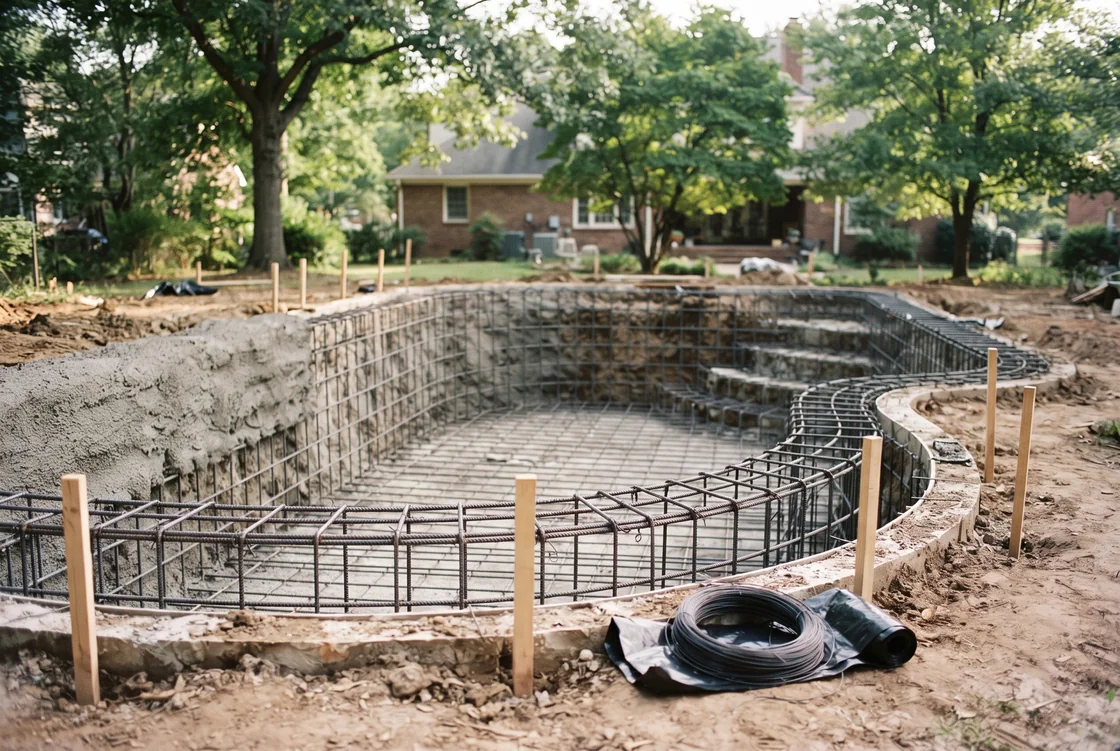
What SEO for pool builders from Digital Reach covers.
SEO for pool builders is the work that makes a pool construction company findable and evaluable across a long project decision: shell and scope architecture for the work it genuinely builds, location pages for the places it can reach, permissioned project proof, local visibility through a real Google Business Profile, and a design-consultation intake that follows an inquiry to a written outcome. Pool builder marketing is the wider frame; this page stays on the search side.
Digital Reach has run search work since 2016 and runs this month to month, senior-led, measured on qualified design-consultation requests from people the builder can serve — not on traffic, and not on a project count nobody can promise.
Pool construction is not a home-service category.
A pool build is a construction project, and the site that sells one has little in common with a site that sells recurring work. Cleaning routes, chemical retail and urgent repair are a different buyer with a different query.
Three things drive it. The product is visual, so proof is photographic before it is written. The decision is long and multi-party. And money is negotiated, not listed, so a page stays useful only without a figure it does not own.
The path runs possibility, budget formation, builder comparison, design and risk evaluation, then consultation. Broader contractor demand has its own home on the general contractor and construction SEO page.
Two lanes, two jobs
- Construction and major renovation: the lane this page is built for. Long consideration, visual proof, a booked consultation.
- Recurring service and repair: named only as a boundary. Where a company sells it, it earns its own pages and measurement.
Five demand modes, and what each changes about the site.
Five modes cover most pool construction books, and each changes what the site carries, what people type and where the limit sits. Publish only the modes a company sells.
| Mode | What the site carries | What people search | Boundary |
|---|---|---|---|
| New inground construction | Build and process pages, design content, location and project proof. | Inground, custom, gunite, fiberglass, vinyl-liner language. | No universal buildability, cost or timing claim. |
| Renovation and resurfacing | A renovation hub: finish, tile, coping, deck, equipment. | Remodel, resurface, replaster, coping, equipment upgrade. | Kept separate from maintenance. No finish-life claim. |
| Integrated spa and outdoor living | Pool-and-spa pages and projects showing combined scope. | Spa, water feature, outdoor kitchen, hardscape, automation. | Only scope the company is licensed and contracted for. |
| Selective commercial and HOA | One qualified capability page and a procurement-shaped intake. | Commercial pool, HOA, hotel, resort, community pool. | A mention is not proof of public-pool work. |
| Repair and recurring service | Its own architecture, only where genuinely sold. | Repair, cleaning, chemical service, weekly route. | Stays out of the construction page’s title and H2s. |
Renovation is the row most often mistaken for something else. Residential remodeling is a different decision with its own home on the residential remodeling lane — no substitute for pool shell or project intent. Pool construction marketing works mode by mode.
Three shells, three maps, and no ranking between them.
Concrete and gunite, fiberglass and vinyl-liner are three query maps, three proof burdens and three business relationships. This page ranks none against the others; that judgment belongs to the builder and the property.
| Shell | What the content map carries | What it does not prove |
|---|---|---|
| Concrete and gunite | Design range, site conditions, excavation and shotcrete process, finish and coping. | Process content is not an engineering opinion. |
| Fiberglass | Model-aware pages, delivery and site-access questions, the manufacturer relationship stated exactly. | Authorization is not ownership, agency or identical service. |
| Vinyl-liner | Build pages, plus liner and renovation content where that work is sold. | It is never forced onto a builder who does not install it. |
Terminology follows the same discipline. Pool builder is primary; pool contractor, pool construction company and swimming pool builder are natural synonyms; installer fits where fiberglass and vinyl-liner roles support it. Pool company is used carefully, because the results behind it drift toward service — which is why pool company marketing stays supporting vocabulary, never the term a construction page leads with.
The architecture the decision needs, and the gate every page passes.
Treat the map below as one worked example. Shell and comparison content for the systems actually built; build-process and site-condition guidance; cost-factor content that names drivers rather than figures; permissioned project pages; service and location pages only where the work and the footprint are real; reviews and credentials; then the consultation form. Links run from the education layer into the project pages, and from there into the service and location pages sharing their scope.
A pool site grows by gate, not by page count. Before a shell, service or location page exists, four questions get a yes:
- Does the company build or install this scope now, with its own crews or its named subs — and would it sign the contract tomorrow?
- Can an excavator, a shotcrete rig or a delivered shell actually reach that county or metro today? A place name on a map is not a footprint.
- Has the owner read and approved every fact on the page — the scopes, the shells, the areas, the credentials?
- Is there a buyer question no existing shell, renovation or location page already answers?
A page that fails one of the four gets folded into the page that passes. Three patterns never ship: a town-swap matrix stamped across places nobody has dug a pool in, the pattern known as doorway pages; an unlabeled stock gallery standing in for the company’s own work; and a promised number of pages or posts per month, which sells activity rather than architecture.
Local visibility starts with eligibility, not tactics.
Before any local tactic, the eligibility question: which of them a given pool builder qualifies for at all. A design centre a customer can walk into is a location under Google’s representation guidelines; a yard, a storage lot or a rented desk is not, and a virtual office is rejected outright. A builder that only travels to the property is a service-area business under Google’s service-area guidance, with the area drawn where the rigs go. Google’s review policy bars incentives, selective solicitation and suppressing an unflattering review, and its published local ranking factors are read here as a rulebook, not as a lever this page claims to pull.
The preflight, before anything is claimed:
- The profile’s name, address and phone match the site and every directory a pool buyer might check.
- The service area is drawn where crews genuinely build today, not where the owner would like to.
- Reviews are asked for consistently, with no gating and nothing offered in exchange for sentiment.
- Finished-pool locations are shown at the privacy level the homeowner approved, tied to a real place.
Schema describes what a page already says. It does not cure an untrue claim.
Not the estimator, not the lender — the builder’s own lender and legal review own every rate, payment and disclosure.
Cost drivers, and the line this page will not cross.
No pool price appears on this page. What a builder’s site can carry is the driver list: shell and system, geometry, engineering, access and site conditions, finish, tile, coping and decking, spa and features, equipment, utilities, permits, allowances and selections.
A builder may publish a range of its own. Four conditions:
- The company owns the data, and a named person maintains it.
- Inclusions and exclusions are written out, so it describes a defined scope.
- It is dated and reviewed on a schedule.
- Site and design review controls the actual proposal.
Five shortcuts get rejected out loud: the scraped national average, the price-per-foot shortcut, the teaser payment figure, the savings promise, the unsupported ROI or resale claim. Digital Reach is not the estimator and is not the lender; the builder, its lender and its legal review approve every program, rate, payment, term and disclosure, and permits stay the builder’s. CFPB Regulation Z §1026.24 and its interpretation make certain stated credit terms disclosure-triggering and require advertised terms to be available; the FTC’s home-improvement page sits beside it. Rules citations, not legal advice.
Project proof, and credentials named one holder at a time.
Project pages are search inventory, not a gallery: one permissioned canonical page per useful project.
What every project page carries before it goes live:
- Original media only, with truthful before-and-after images and no stock standing in for real work.
- Location at the privacy level the client approved, with a written release for photos and quotes.
- Shell, scope, site constraints and features stated in the words a buyer would use.
- Descriptive captions and accessible alt text, and links from the service and location pages sharing the scope.
Credentials need the same care. The Pool and Hot Tub Alliance publishes a build and design certification pathway naming four levels, beginning with Certified Builder Professional — CBP, a person’s credential rather than a ‘pool builder’ certification, verified holder by holder for current status (read live 2026). PHTA’s policy handbook is explicit that certification is granted to individuals, not companies (updated March 2024): a site names the holder and current status, never a certified company. ANSI/PHTA/ICC-5 2025 is separate again: a voluntary residential inground standard for new construction and remodeling, replacing no adopted code, engineering judgment or contract term (2025 edition). Membership, a course, an individual certification and conformance are four claims, and none is a Digital Reach credential.
The consultation request is the whole conversion.
The form asks only what routes an inquiry: ZIP or county; new build, renovation, spa and outdoor living, or commercial; shell preference or undecided; project stage; features; planning window; an optional builder-approved budget band; an optional request for approved financing information; contact and consent. Those are routing inputs, not design, permit, credit, price or completion decisions, and the optional fields never gate the form.
| Step | What the system records | What it does not prove |
|---|---|---|
| Form start, then qualified submission | Source, query and landing page, then your fit fields. | That the project is buildable, funded or approved. |
| Scheduled, then attended consultation | Booked, attended, and the project type behind it. | That an attended meeting becomes a proposal. |
| Proposal, then signed project | The outcome your CRM records, with a reason code on losses. | Attribution stays directional; referrals and walk-ins leave an unknown bucket. |
The confirmation uses a response process the builder can keep — no invented service level, no promise about callback speed. You define qualified, booked and signed; Digital Reach reports against your definitions, never claiming complete attribution.
Four business models, and one refusal about timing.
Two things a vertical page usually gets wrong. The first is the business model, below. The second is timing: no inspected source established a universal demand curve, so no peak month, no season claim and no buyer-duration number appears here. Plan from your own Search Console, CRM and capacity, and keep evergreen pages maintained all year.
| Model | What it changes | What it never licenses you to say |
|---|---|---|
| Independent builder | One local entity you control; proof you build yourself. | Anything about another company’s network or outcomes. |
| Authorized dealer | Brand permissions; the relationship described exactly. | That authorization is ownership, agency or identical service. |
| Manufacturer | Product and warranty content owned by the maker. | That a maker’s material is your project proof. |
| Franchise location | Approval limits, shared marks, confirmed profile ownership. | That network figures describe your location. |
Getting quoted when someone asks an assistant for a pool builder.
An assistant answering who should build someone’s pool works from what the web already says about a business. There is no submission form and no placement to buy. Google’s structured-data policies treat markup as a description of what a page already says, never a substitute for it.
- Answer the pool buyer’s first question in the first lines of each page, in the words they typed.
- Scoped facts an assistant can repeat safely: the shells built, the scopes sold, the areas served.
- Credentials attributed to the individual who holds them, with a status a reader can verify.
- Headings a passage can be lifted from without losing what it applies to — one shell, one scope, one county.
- Finished-project and location detail no templated service page can fake.
- Entity data an assistant reconciles across profile, site and directories without a conflict.
How Digital Reach runs it, and whether you are ready.
The method is four moves: diagnose the site, profile, published pages and intake path as one system; prioritise by what the decision path is missing; implement against the publication gate, with an owner’s review first; measure against your definitions. The four outputs: Separate, Substantiate, Sequence, Measure. No step carries a date.
The facts, kept apart on purpose. Founded 2016, senior-led by Shane Perry, Founder and Lead SEO Strategist, from 25 Kamaha’o Street, Wailuku, HI 96793 — one base, and the only one, serving local and national clients. Digital Reach runs 10+ active retainers right now: the current book. Separately, it has worked with over 100 businesses across 10-plus years — a lifetime figure, never added to the first, and carrying no industry breakdown, so neither counts pool builders. Month to month, 30 days’ notice, accounts in your name. There is no permissioned pool project here and no pool case study; the page argues from strategy built for the vertical and primary sources: the retainer in full, our pricing methodology.
Ten yes-or-no questions about your own operation. None asks about a customer, address, price or project:
- You can name the pool types and scopes you build, and the ones you decline.
- New construction and major renovation are described separately, and both are true.
- Recurring cleaning, chemical and route work is genuinely sold or absent.
- You can name the counties or metros your crews can build in today.
- Every shell type on the site is one you actually build or install.
- Independent, authorized dealer, manufacturer or franchise status is stated exactly.
- Every published credential names the individual who holds it, with a current status.
- You hold written permission for every project photo, detail and quote published.
- Cost and financing content has a named owner, with lender and legal review.
- A qualified consultation request has a written definition, and lost ones get a reason code.
The pool-builder readiness scorecard.
Ten yes-or-no rows, each about your own operation rather than any customer, address, price or project. Tick the ones that are true today — the rows you cannot tick are the ones to settle first. This is a marketing-planning aid, not a pricing tool, an estimate, a design or engineering assessment, a licensing check, a safety assessment, an audit or a certification.
Ten yes-or-no questions about your own operation. None asks about a customer, address, price or project:
0 of 10 readiness rows true today
Settle the scope first
A campaign is premature. Most of these are operating decisions, not marketing ones – settle the scopes you build, the shells you actually install, the areas your crews reach and who owns the cost content first, because visibility amplifies whatever operation already exists.
No name, email or phone number is asked for anywhere in this worksheet. The only thing sent is an anonymous analytics event carrying the tick count, the band and the page path — never a customer, address or project detail — and the worksheet resets when you leave the page. Print it or take a screenshot if you want to keep it.
Building pools in Hawaii?
Our home market has a page of its own, and it owns the geography: island service-area logic, the licensing and credential verification a buyer checks before hiring, the county-level limits, and the calculator for scoping an SEO program there. Everything here still sits underneath it — the demand modes, the shell maps and the publication gate do not change at a state line.
Frequently Asked Questions.
Don’t see your question? Call (808) 758-5058.
What is SEO for pool builders?
The work that makes a pool construction company findable and evaluable while someone decides who to hire: shell and scope pages, location pages for areas you serve, a real Google Business Profile, permissioned project proof, measurable intake.
Should pool construction and pool service use the same strategy?
They share an entity foundation, then split above it. Construction and major renovation run on long-consideration queries and a booked consultation; cleaning, chemical service and repair run on immediate queries and a different conversion. Where both are sold, each gets its own pages.
Do concrete, fiberglass and vinyl-liner pools need separate pages?
Only where the company genuinely builds or installs them and the buyer's questions materially differ — delivery and site access, engineering, finish, renovation scope. Where a shell is not sold, the page should not exist.
How should cost or financing be published on a pool builder's site?
Explain the drivers, from shell and geometry through engineering, site access, finishes, equipment, permits and selections. Publish a range only if you own the data, define inclusions and exclusions, date it, and let design review control the proposal. Digital Reach is not the estimator and not the lender, and no page promises a quote or an approval.
How long does SEO take?
There is no universal number, and this page will not invent one. It depends on the crawl and index state you start from, the market, the proof you can publish, how quickly implementation lands, and a sales cycle that belongs to the buyer.
Does Digital Reach promise rankings or signed projects?
No. Nobody is able to, and an agency that says otherwise is selling something else. The work is month to month, 30 days' notice, accounts in your name, reported against measures you agree.
Related resources + tools.

Sources
- Pool & Hot Tub Alliance — build and design certification pathway, naming four levels that begin with Certified Builder Professional (CBP) and rise through three advanced levels above it; CBP names a person's credential, not a 'pool builder' certification, the pathway describes a credential held by a person rather than a firm, and current status has to be verified holder by holder (read live 2026)
- Pool & Hot Tub Alliance — certification policy handbook, stating verbatim that certification is granted to individuals, not companies, and recording a three-year validity period ending December 31 of the third year (the CPO is separate); membership, course attendance and individual certification are three separate claims, and none of them is a license or a company credential (updated March 2024)
- ANSI/PHTA/ICC-5 2025 — American National Standard for residential inground swimming pools, a voluntary standard covering design, equipment, operation and installation across new construction and remodeling; a voluntary standard is not adopted code and replaces no engineering judgment, manufacturer instruction or contract term, and conformance to it is a separate claim from certification (2025 edition)
- Consumer Financial Protection Bureau — Regulation Z §1026.24, Advertising, read together with its official interpretation, under which certain stated credit terms are disclosure-triggering and advertised terms must be available; cited here as a rules boundary only, never as legal advice and never as a claim that Digital Reach reviews, drafts or clears credit advertising (read live 2026)
- Federal Trade Commission — home-improvement penalty offenses, the agency's enforcement context for home-improvement advertising; cited as a boundary a builder reads with its own counsel, never summarised here as legal advice or as a compliance opinion about any particular page (read live 2026)
Find out whether this is the right work for your company.
A scope call with Shane: the scopes you build, the shells you install, the areas your crews reach, and what you hold that is publishable.
If it is not a fit, you hear that on the call. Founded 2016. Senior-led. Month to month, 30 days' notice, accounts in your name. No promised rankings, consultations or signed projects.