
Honolulu SEO for businesses competing in the urban core.
City lane, local eligibility, and how a scope is sized
Honolulu SEO is the city lane: one owner page for a business whose customers and premises connect it to the urban core. Digital Reach was founded in 2016, and Shane Perry leads the work from its only base in Wailuku, Maui. Honolulu is a service market without a Digital Reach location. Engagements are month-to-month; the current book is 10+ active retainers.


What the Honolulu lane covers, and who should be on it.
Honolulu SEO gives each kind of city search, whether service, local presence, brand, or informational, one page to own it. It fits a customer-facing location or service-area business whose operations connect it to the city. The client’s entity and address govern local decisions; Digital Reach operates from Wailuku.
Work is month-to-month. Some packages carry a setup fee. The page calculator produces a planning range for a retainer of this kind, never a quote and never a promised outcome.
Who this page is for
- A city storefront comparing providers for its own eligible location.
- An owner building a shortlist who wants scope logic and price drivers recorded before a conversation.
- A business testing whether its real demand extends materially beyond the city.
Which Honolulu situation are you actually in?
Fit begins with documented operations rather than a place name. Each situation calls for different page and profile decisions; none creates a Digital Reach location. The client’s entity, premises, customer contact, and served ground set the boundary.
Customer-facing city location
Are customers served at a real, staffed, eligible Honolulu location? Page and profile work use that business’s address and ownership records; Digital Reach’s address is never attached to the client.
Genuine service coverage
Does the business meet customers in person and genuinely serve the city? An eligible service-area configuration reflects those operations, while the website states substantiated coverage without inventing premises or proximity.
Demand beyond the city
When material demand continues outside Honolulu, Oahu SEO for businesses serving beyond Honolulu is the route for broader architecture. This city page stops at its boundary instead of duplicating that job.
Districts are orientation, not a page plan.
Using 2022 ACS data, the City and County’s 2025 plan records 451,030 people in the Primary Urban Center regional planning area, a planning area—not Honolulu CDP, Honolulu County, all of Oahu, a search audience, or Digital Reach’s service area. U.S. Census QuickFacts estimates 988,703 Honolulu County residents on July 1, 2025; that county population estimate is not Honolulu city, the Primary Urban Center, all of Oahu, a simultaneous population, searches, or customers. Downtown, Chinatown, Kakaʻako, Ala Moana, Kaimukī, Mānoa, Kalihi, Kapahulu, and Hawaiʻi Kai are orientation examples only, not automatic page assignments.
Distinct query purpose
The intended search task must justify a separate destination.
Documented service reality
The business must genuinely operate in or serve the ground named.
Inspectable business evidence
Recorded inquiries or profile activity must distinguish the proposed coverage.
Maintainable original material
Durable facts must provide substance beyond a renamed heading.
A district name remains orientation until those tests clear. Shared evidence stays on the city page; no extra URL is created.
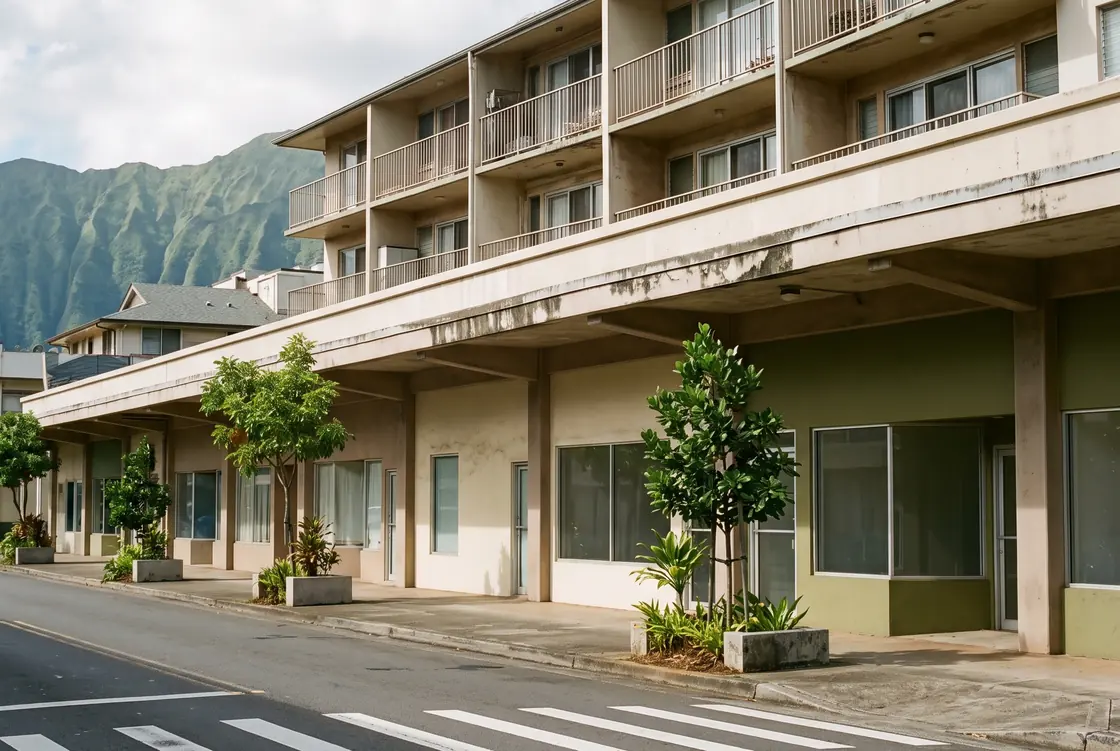
The work areas, and the record each one leaves.
This page applies the work to one city; the parent service page owns the full retainer definition. Each row joins a Honolulu decision to inspectable evidence and a guardrail, keeping a conditional proposal from becoming a universal stack or production quota.
| Work area | Honolulu decision | Evidence a client can inspect | Guardrail |
|---|---|---|---|
| Query ownership | Assign city service, brand, district, and informational intent once. | Approved query-to-URL register and consolidation notes. | No competing page for the same Honolulu term family. |
| Local entity | Confirm customer contact, type, categories, address or service-area facts, duplicates, and access. | Profile change record, access record, and correction queue. | No borrowed address, virtual office, duplicate listing, or false city presence. |
| Page experience | Match title, H1, service detail, trust information, calls, and forms to assigned intent. | Revision log plus checks on phone and form routes. | No invented place, price, credential, or commercial claim. |
| Technical discovery | Inspect rendering, canonicals, redirects, sitemap, schema, internal paths, and observable AI citation checks. | Prioritized issue list with verification for completed changes. | Visible facts govern schema; no redirect chain or city address. |
| Local authority | Correct citation conflicts and assess defensible sources when scope calls for them. | Citation log, relevance notes, source record, and approvals. | No fixed link quota, placement promise, or blanket directory count. |
| Measurement | Connect landings and eligible profile activity to recorded calls, forms, and qualification. | Completed work, observed demand, inquiries, qualification, and decisions. | No financial attribution without client systems and agreed definitions. |
A profile follows the business, not the keyword.
Google Business Profile guidance comes after eligibility, because a city keyword cannot change the client’s business model. Start with Google’s eligibility rules and read them against the client’s customer contact, premises, and operating arrangement.
The policy-safe record:
- Use the client’s legal entity and verified account ownership as the starting record.
- Follow Google’s representation guidelines for accurate address and service-area handling.
- A displayed Honolulu address must be a legitimate customer-facing location for that business.
- A service-area configuration describes where an eligible business actually meets customers.
- Ask every customer accurately, without an incentive, gate, or selective solicitation, under the prohibited and restricted content policy.
- Keep request, response, and review records the client can inspect; set no rating or volume target.
Google’s eligibility rules read the client’s real premises, not the city a keyword names. A business can serve Honolulu without ever acquiring an address in it.
Google’s eligibility rules read the client’s real premises, not the city a keyword names. A business can serve Honolulu without ever acquiring an address in it.
What the reporting view separates: activity from evidence.
Reporting keeps completed work, search observations, and business evidence apart. A platform change, an inquiry, and a client-system outcome are different facts and must remain labeled that way.
| View | Minimum record | Question it answers |
|---|---|---|
| Completed work | Item, profile, approval, completion, verification. | What changed, and was it checked? |
| Search selection | Assigned query/page pair; selection status; clicks, CTR, impressions, and observed-position distribution. | Is the intended city page selected? |
| Local presence | Eligible interactions plus field or configuration changes. | Is the profile accurate and measurable? |
| Inquiry path | Landing, phone action, form start or submit, spam status. | Which paths create identifiable inquiries? |
| Qualification | Reachability, service fit, location fit, recorded disposition. | Are inquiries commercially relevant? |
| Next decision | Finding, evidence, owner, dependency, approval. | What should change next, and why? |
Revenue enters the view only when client-owned CRM, call, and form records supply a defensible definition and match. Otherwise, reporting stops with available evidence rather than modeled attribution.
The conditions that shape a city engagement.
A Honolulu engagement is sized from the conditions a proposal must address in writing, not from a preset bundle. Read each driver against the client’s real footprint, website, decision process, and measurement access. Nothing here creates a universal package or delivery schedule.
What a Honolulu proposal has to price:
- Number of genuine locations and eligible profiles.
- Number and separation of service lines.
- City-versus-island page architecture needed for distinct intent.
- Crawl, render, and canonical state of the pages a city scope would touch.
- Competitive landscape for the services actually offered.
- Original content needed to support approved pages.
- Approval ownership, access, and implementation constraints.
- Analytics, call, form, and qualification measurement setup.
Work is month-to-month. Some packages carry a setup fee. The proposal states the approved scope, while the statewide page holds the parent retainer definition. The page calculator reads business type, primary island, competition tier, and whether you already get organic traffic, on the same published formula that runs on Hawaii SEO scope and fees. Its output is a planning range for a Digital Reach SEO retainer; it is not a quote, an ROI estimate, a lead projection, a ranking chance, or a time to result.
Hawaii SEO cost calculator.
Estimate a realistic monthly investment for your business type, island, and competition tier. Uses the same published formula as every Digital Reach quote — a range, not a quote.
Range, not a quote — your actual scope determines final price. Engagements are month-to-month. Some packages carry a setup fee. Formula and inputs are published on our pricing methodology. n=10+ active retainers.
One operator, one address, two separate counts.
Digital Reach was founded in 2016. Shane Perry, Founder + Lead SEO Strategist, is the senior owner of the work and its central page, profile, and measurement decisions. The company has one base at 25 Kamaha’o Street, Wailuku, HI 96793. Honolulu is a service market only: Digital Reach maintains no office there and has no team there. Serving the city creates no second location, address, or profile. Company background is on About.
The current book is 10+ active retainers. Lifetime reach is over 100 businesses across Hawaii over 10-plus years. Those labels describe separate measurements and are not city counts. The first call is free and takes place with Shane; any engagement that follows remains month-to-month.
Frequently Asked Questions.
Don’t see your question? Call (808) 758-5058.
What is the difference between Honolulu SEO and Oahu SEO?
Honolulu SEO is the city lane for commercial intent, eligible local presence, and genuine urban service coverage. When a business’s locations or customer reach extend beyond the city, the island route owns that broader question. The pages divide responsibility by term family; the distinction is scope, not quality.
Does Digital Reach have an office or team in Honolulu?
No. Digital Reach has one base at 25 Kamaha’o Street, Wailuku, HI 96793, and keeps no office or team in the city. Shane Perry, Founder + Lead SEO Strategist, directs city engagements from Wailuku. Serving Honolulu names a market served; it does not establish another location, address, staff roster, or Business Profile.
What does a Honolulu SEO engagement include?
Work may include query ownership, eligible profile corrections, page revisions, technical discovery, citation records, authority assessment, and measurement setup. The mix follows the site’s condition, client access, and operating facts, while the parent service route holds the complete retainer definition. No fixed inventory, cadence, or page quota applies.
How are Honolulu SEO work and inquiries reported?
Reporting separates completed changes from search observations and business evidence. It can record landing-page selection, clicks, eligible profile interactions, calls, forms, and qualification when the client’s systems capture them. Revenue appears only with a defensible client-owned definition and data connection; absent that, the report stays with observable records.
What are the pricing and contract terms for Honolulu SEO?
Price follows what a proposal has to cover in writing: how many eligible premises exist, how many services are sold separately, how much of the site has to be rebuilt before a city page can rank, and what has to be wired up before an inquiry can be counted. Work is month-to-month.
Related resources + tools.

Sources
- Census QuickFacts — Honolulu County: V2025 county residents, not city/search counts (read 2026-09-14).
- Honolulu 2025 Local Hazard Mitigation Plan: 2022 ACS Primary Urban Center planning-area population, not city/search counts (read 2026-09-14).
- Google Business Profile Help, eligibility: who qualifies for a profile; a policy, not a result (read 2026-09-14).
- Google Business Profile Help, representation: accurate address and service-area handling; no second city profile (read 2026-09-14).
- Maps user-generated content policy: no incentivized, gated or selectively solicited reviews (read 2026-09-14).
Before a scope exists, there is a call.
A first call with Shane is free. It covers city scope, operating facts, access, and measurement without promising a search position.
Digital Reach works month-to-month from Wailuku, where the company was founded in 2016. If a retainer fits, the written scope defines what is included.