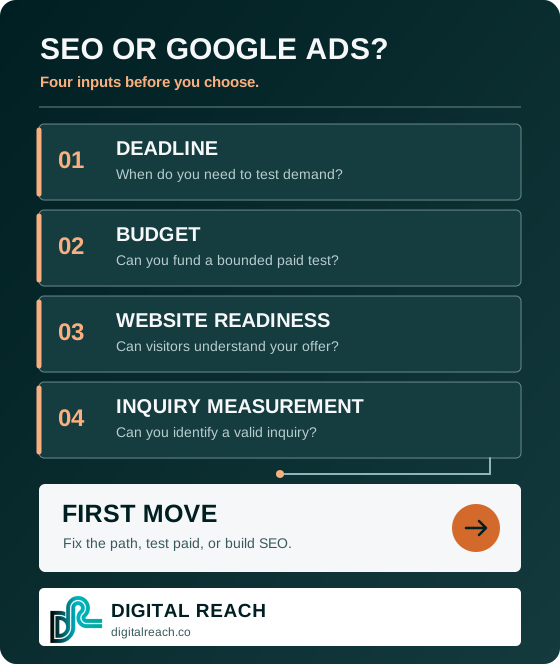
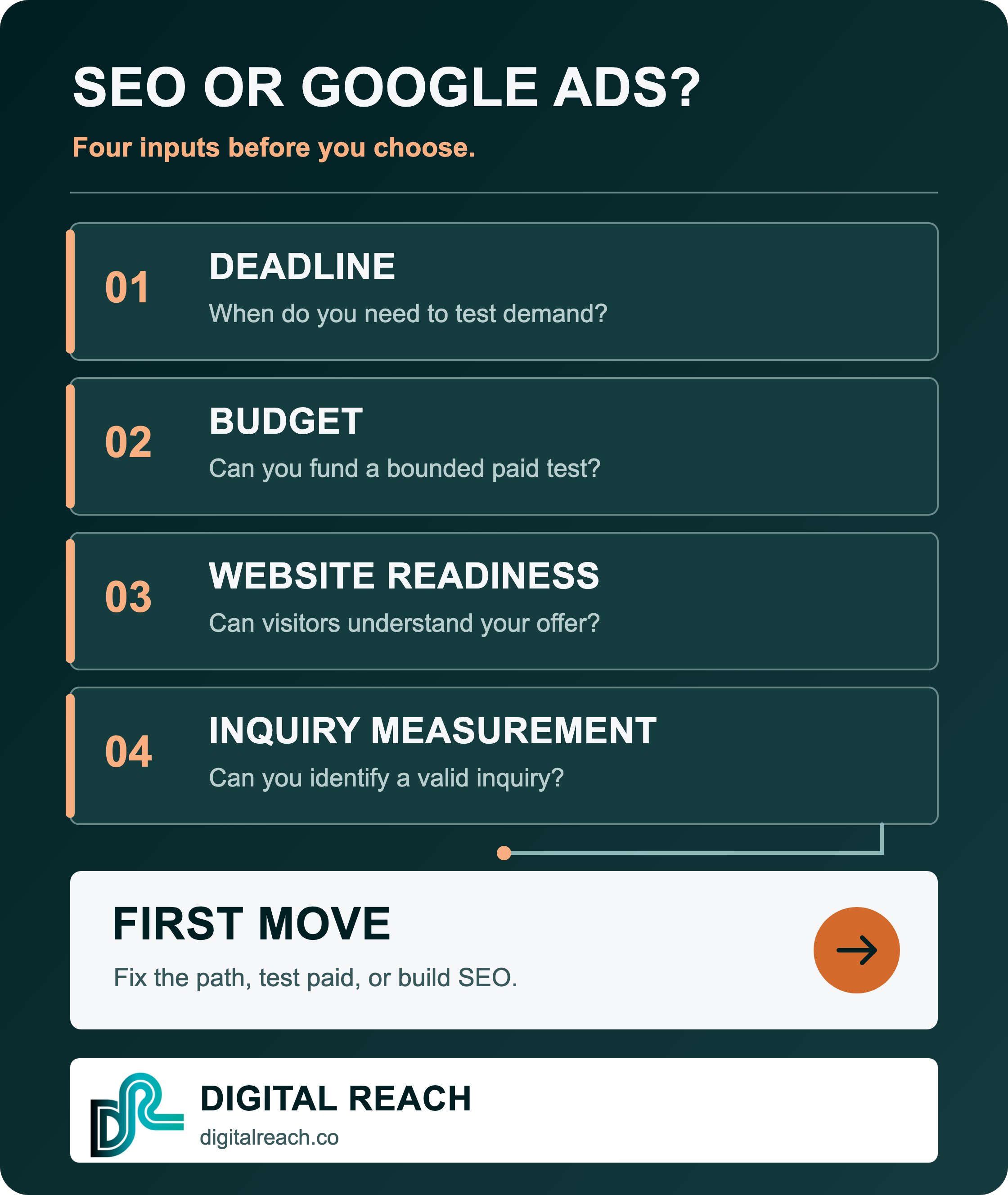
Choose Google Ads when you need a controlled search test and can fund a bounded paid campaign. Choose SEO when you can invest in useful pages and technical improvements over time. If your offer or contact path is unclear, fix that before sending more traffic to it.
Neither channel guarantees qualified inquiries. The right first move depends on your deadline, budget, website readiness, and what you can measure.
Different routes. The same need for a clear customer path.
THE DIFFERENCE
Two ways to appear. Different commitments.
SEO helps search engines understand useful pages and helps people choose whether to visit. Google Ads lets you pay to compete for selected searches. Buying ads does not buy organic rankings, and organic visibility does not remove the work needed to maintain a good site.
Swipe or scroll the table to compare both channels.
Compare the work and tradeoffs before choosing a channel
Decision point
SEO
Google Ads
What creates visibility?
Relevant pages, a usable site, and signals that help a search engine understand them. Placement is not guaranteed.
A campaign enters eligible ad auctions based on its settings, budget, bids, and relevance. Placement is not guaranteed.
What do you pay for?
No fee to Google for an organic listing. You still fund research, content, technical work, and upkeep.
Ad spend goes to the platform. Setup, management, creative, and landing-page work can be separate costs.
What can you control?
The site, its content, and the work you prioritize; not the final ranking or how quickly it changes.
Campaign targeting and spending limits; not every auction outcome or whether a click becomes a customer.
What happens when you pause?
The pages remain, but visibility can rise or fall as competitors and search systems change.
Paid placements from a paused campaign stop serving; the website and any organic work remain.
What should you measure?
Relevant query-to-page visibility, engaged visits, valid inquiries, and eventually qualified customers.
Spend, search terms, landing-page actions, valid inquiries, and qualified customers.
Five short answers. The worksheet makes a directional recommendation, not a forecast. Your answers stay in this browser page; no contact details are required.
These are starting conditions, not universal channel rules. A useful answer includes the constraint that could change the decision.
01 / PAID TEST FIRST
A ready offer with a near-term test.
Your landing page works, the inquiries can be reviewed, and you can set a spend limit. A focused Google Ads test may show whether selected searches bring the right people. It still needs relevant keywords, a useful page, and enough observation to judge lead quality.
Customers ask questions your site does not answer well, and you can support research, pages, technical upkeep, and measurement. SEO gives those answers a chance to be found in organic search. It cannot promise a ranking or a deadline.
If the offer, page, form, or follow-up is weak, channel selection is premature. Fix the visitor path and define a valid inquiry first. Then test paid demand, build organic coverage, or do both with a clearer measure of value.
A paid test can help you learn which searches and messages bring worthwhile inquiries. SEO can build helpful pages around durable customer questions. Keep the landing-page promise consistent across both, then compare qualified outcomes—not click counts alone.
Ad spend does not lift organic rankings. If you run both, give each channel a clear job and review where a real customer entered, inquired, and qualified. Attribution will not be perfect; make the definition of a qualified inquiry explicit.
MEASURE IN THIS ORDER
Search relevanceAre the queries aligned with an actual service or product?
Valid inquiryCould a real prospect reach you, and was the contact genuine?
Qualified opportunityDid the need, location, scope, and timing fit your business?
Business resultDid the opportunity become a sale or valuable next step?