
Hawaii SEO for property managers, with STR eligibility checked first.
What the county record settles, and what sets the range
A senior-led search program for long-term rentals, lawful vacation rentals, or community associations—owner and manager check the county record and registration before a page or listing goes live.


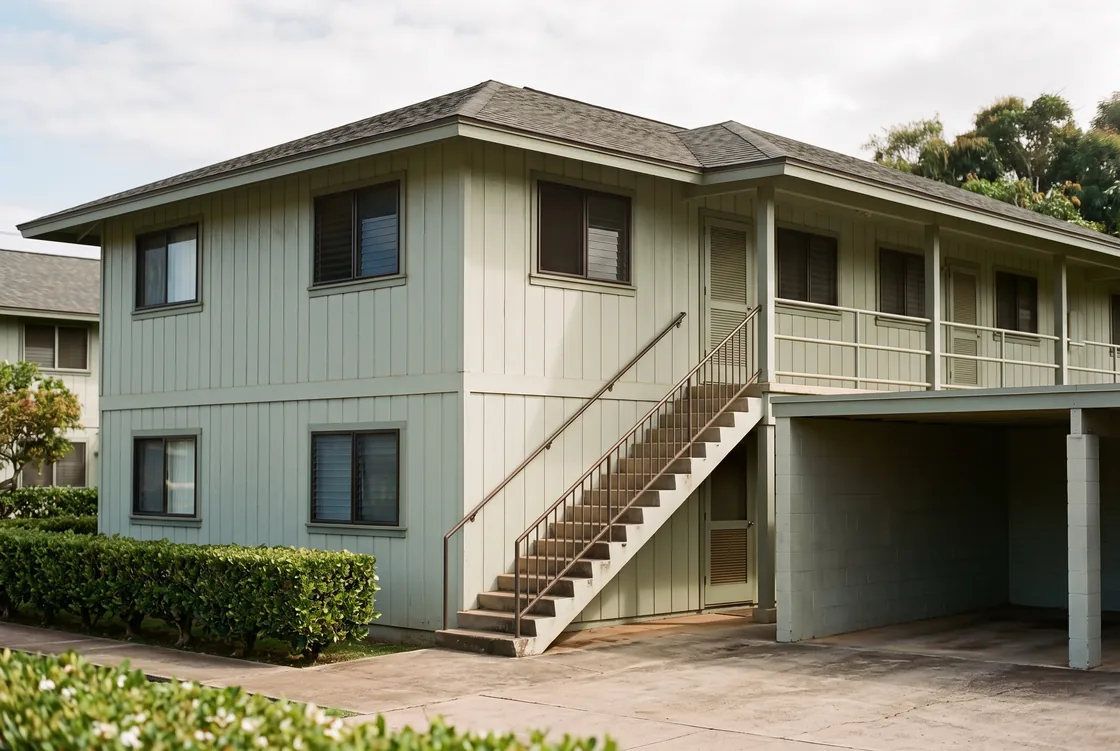
Eligibility settles first, then pages get built.
One Wailuku base; reach elsewhere in Hawaii is not premises. Month-to-month work covers the model split, the eligibility record, profile, measurement. Some packages carry a setup fee.
Digital Reach structures and implements; whether a unit may be used or advertised sits with the owner, county, State and counsel. Read the national property management SEO framework for the system.
Who it is for
- A long-term manager, one or two markets.
- A manager with documented vacation status.
- An operations lead sizing up scope.
Three trades, one label, and each faces two ways.
Hawaii property management is three trades under one label, each searched from two directions: owners weighing a hand-off, residents and guests wanting to act.
| The model | Owner-side search | The other side | If mixed |
|---|---|---|---|
| Long-term residential | Management versus self-management | Homes now, price, applying | Neither finishes |
| Vacation rental, record current | Eligibility, distribution, reporting | Destination, dates, amenities | Owner questions buried |
| Community association | Governance, accounting, vendors | Portals, notices, documents | Boards get resident copy |
A community association is its own model, not a long-term rental with a board attached. Navigation, calls to action and reporting split.
Four counties keep four records, and they do not agree.
Rules move by county, parcel and permit or registration status; the record is read before search or booking. Not legal or tax advice.
| County | Current record · read | Owner settles, with | Never said |
|---|---|---|---|
| Maui | Ordinance 5909 phases out Minatoya-list apartment-zoned rentals: 2028-12-31 West Maui, 2030-12-31 elsewhere; proposed H3/H4 continuation reaches no parcel yet · 2026-09-16 | Maui County | Rentals all ended |
| Honolulu | Ordinance 22-7 runs registration; the DPP FAQ is current on resort-area eligibility, under-30-day registration, TMK in ads · 2026-09-16 | Honolulu DPP | One ordinance rules |
| Hawaii County | A 2026 notice requires hosted and unhosted rentals under 180 days to register; Planning adds Ordinance 2018-114 · 2026-09-16 | County Planning | Hosted skips registering |
| Kauai | Planning bars new transient rentals outside Visitor Destination Areas; certificates renew yearly, no grace · 2026-09-16 | Kauai Planning | Past certificate stands |
Records: Maui’s Ordinance 5909 and staff report; Honolulu’s Ordinance 22-7 and DPP FAQ; Hawaii County’s notice and Planning page; Kauai Planning. Publishing is downstream of the county record. Where a unit’s current status cannot be produced, nothing about it goes on a page — and that is a publishing rule, not a legal finding.
Publishing is downstream of the county record. Where a unit’s current status cannot be produced, nothing about it goes on a page — and that is a publishing rule, not a legal finding.
The State asks second, and county permission is not it.
General excise tax applies to rental income generally; 180 consecutive days or more is long term here, shorter terms add transient accommodations tax. The owner stays responsible even where a manager files; registration is separate from county permission.
A publishing decision is made against:
- Jurisdiction, and which parcel.
- Term, and the permission type.
- Current status, and its source.
- Who confirmed it, and when.
Unknown is not eligible: with no current status in a record, nothing about that unit publishes. Tax questions go to the owner’s tax adviser.
A market earns a page when somebody works it.
A page is earned by operations: inventory held, service delivered, something no portal carries. A managed building is not an office.
What decides what gets built:
- An island served or a mailing address earns nothing.
- Homes, vacation units and communities stay apart.
- One profile per eligible real location, on Google’s representation and service-area rules.
- The manager owns it and picks the category; Digital Reach takes access, returns it.
Two markets saying the same thing are one page. The broader Hawaii search guide covers island demand; the base is a Wailuku office, everywhere else reach.
The site keeps the record, portals move inventory.
Zillow, Trulia, HotPads and Apartments.com distribute long-term inventory; Airbnb and Vrbo distribute vacation stays; platform search factors are platform rules, not Google signals. A feed is distribution, not duplication.
Confirm the permission
Rights to photographs, wording, facts.
Map the fields
Each gets an owner, or nobody.
Publish with a status
A live record carries status and date.
Retire on a rule
A gone unit comes down on a rule.
Report what moved
What went up, came down, changed.
Real costs: stale information acted on, wasted crawl, broken hand-offs. The site keeps what distribution never will: fit, exclusions, maintenance facts, eligibility record.
One figure belongs here, and a short list does not.
Hawaii held 574,520 housing units on July 1, 2025 — a statewide count of housing units, occupied or not, owned or rented, on the market or not, and therefore not managed inventory, not vacancies, not rentals, not demand, as the State’s 2025 housing highlights also print.
No tenure, availability or occupancy follows; no second market number appears. Rents, for-rent counts and units-needed projections measure something else.
Condition and scope move the number, not the size of the company.
What moves it before the tool runs: distinct markets, how contested they are, site and record condition, fields held elsewhere. Nothing is forked; how the formula is built is published.
Four selections, nothing else:
- Business type — Property management, the formula’s existing 1.25× option.
- Primary island — each carries its own multiplier.
- Competition tier — the pressure on those queries.
- Do you already get organic traffic? — existing traffic pulls the published range tighter.
Back comes a planning range and scope label: no quote, no audit, no eligibility finding, no date. Work runs month-to-month. Some packages carry a setup fee. Terms: the standing SEO retainer.
Estimate the Hawaii property management scope.
Choose a business type, an island and a competition tier; a monthly range appears underneath. Each figure traces back to the pricing formula Digital Reach publishes, so the result is indicative scope rather than a quote. The business-type list puts property management at 1.25×. Work runs month-to-month. Some packages carry a setup fee.
Range, not a quote — your actual scope determines final price. Formula and inputs are published on our pricing methodology.
Wailuku, and two separate counts.
Digital Reach opened in 2016, and Shane Perry, Founder + Lead SEO Strategist, leads it still; the rest is inside Digital Reach. All of it runs from one base at 25 Kamaha’o Street, Wailuku, HI 96793.
One measure is what the book holds this month: 10+ active retainers. Reaching much further back: over 100 businesses across Hawaii over 10-plus years, no trade or island attached. No case, review or client tile appears: no Hawaii property-management engagement is permissioned.
Frequently Asked Questions.
Don’t see your question? Call (808) 758-5058.
Is SEO different for LTR and vacation-rental managers in Hawaii?
Yes. Long-term work answers owners weighing management against self-management, residents hunting homes available now. Vacation-rental work answers owners weighing eligibility and distribution, guests choosing dates, amenities and policy. Only vacation work carries a county gate.
How do Hawaii STR rules affect SEO?
They decide what may be published, not where anything places. Pages and listings reflect what county and State records show; with no current status, nothing publishes. Not legal or tax advice: owner, county, State and counsel settle it.
Can one Google Business Profile cover every island?
No. A profile stands for an eligible, real, staffed location and the business as already recognized, not an ambition. An ordinary virtual office does not qualify; service-area rules cap reach. The manager settles eligibility.
Do we need O‘ahu, Maui, Hawai‘i Island and Kaua‘i pages?
Only where each is a market the company genuinely operates, with inventory, service and something useful to say. Four county names are not four pages; a service area or mailing address earns none.
How is Hawaii PM SEO scope priced?
Off four inputs — business type, primary island, how contested the market is, existing organic traffic — through the published formula, with Property management at its existing 1.25× option. The call works from the indicative band; it quotes nothing, audits nothing, dates nothing. Work runs month-to-month. Some packages carry a setup fee.
Related resources + tools.
Sources
- Maui County — Ordinance 5909 announcement and the current H3/H4 staff report (https://www.mauicounty.gov/DocumentCenter/View/158148/022426-Agenda-Item-A2_RESO-25-230_1Memo-and-Report_PC-Staff-Report-H3-H4-002), read 2026-09-16: the ordinance reaches apartment-zoned Minatoya-list transient vacation rentals rather than all short-term rentals, and the report records sunsets of 2028-12-31 in West Maui and 2030-12-31 elsewhere, subject to stated exemptions.
- City and County of Honolulu — Ordinance 22-7 and the current Planning and Permitting FAQ (https://www.honolulu.gov/dpp/home/faq/), read 2026-09-16: the ordinance is the current instrument; the FAQ is current for resort-area eligibility under Ordinance 25-52, registration of eligible under-30-day units under nonconforming-use treatment, and registration or NUC plus TMK fields in advertising.
- County of Hawaii — 2026 registration notice and Planning short-term vacation rental resources (https://www.planning.hawaiicounty.gov/resources/short-term-vacation-rentals), read 2026-09-16: hosted and unhosted transient vacation rentals under 180 days must register, valid pre-September-1 permit holders are deemed registered, and the resources carry Ordinance 2018-114 and Rule 23. Both refuse a plain automated fetch.
- County of Kauai — Planning transient vacation rentals page and the 2026 homestay recertification form (https://www.kauai.gov/files/assets/public/v/1/planning-department/documents/tvr/2026_homestay_recertification_applicationfillable.pdf), read 2026-09-16: new transient vacation rentals outside Visitor Destination Areas are not allowed, and existing nonconforming-use certificates renew annually with no grace period. Neither page rules on any single parcel.
- Hawaii Department of Taxation — rental activity guidance and licensing information (https://tax.hawaii.gov/geninfo/licensing/), read 2026-09-16: rental income generally carries general excise tax, a term of 180 consecutive days or more is treated as long term, shorter terms carry transient accommodations tax too, and the owner stays responsible even where a manager files.
- Census QuickFacts Hawaii and DBEDT 2025 housing highlights (https://files.hawaii.gov/dbedt/census/popestimate/2025/housing/2025-dbedt-housing-highlights.pdf), read 2026-09-16: Hawaii had 574,520 housing units on July 1, 2025 — a statewide count of units, occupied or not, owned or rented, on the market or not, and not managed inventory or demand. QuickFacts refused automated fetch; DBEDT prints it.
- Google Business Profile Help — service areas, representation (https://support.google.com/business/answer/3038177?hl=en) and categories (https://support.google.com/business/answer/7249669?hl=en), read 2026-09-16: an address is hidden where customers are not served, service areas are capped and cannot be radius-based, separate locations need genuine staffing, and the most specific category is chosen in the dashboard. Eligibility is settled with Google.
- Digital Reach pricing methodology, read 2026-09-16: the published formula behind this page’s estimate, including the business-type, island and competition-tier inputs and the organic-traffic question, with the reasoning for each. Its output is an indicative planning range and a scope label, settling no quote and no date.
Scope follows the record, not the other way around.
Shane takes the first call himself, free: what the records support, what pages carry, whether this fits.
Since 2016 the work has come out of Wailuku, always month-to-month. No position is promised; eligibility belongs to owner, county and counsel.