
Find a capability
A process or product search needs a page that names the work and the applications it serves.
Make the work you do findable, understandable, and easy to quote.
A buyer may search for a process, material, part, application, or required standard before searching for a supplier. Manufacturing SEO connects those searches to pages that show what a company can actually make and how to request a quote.
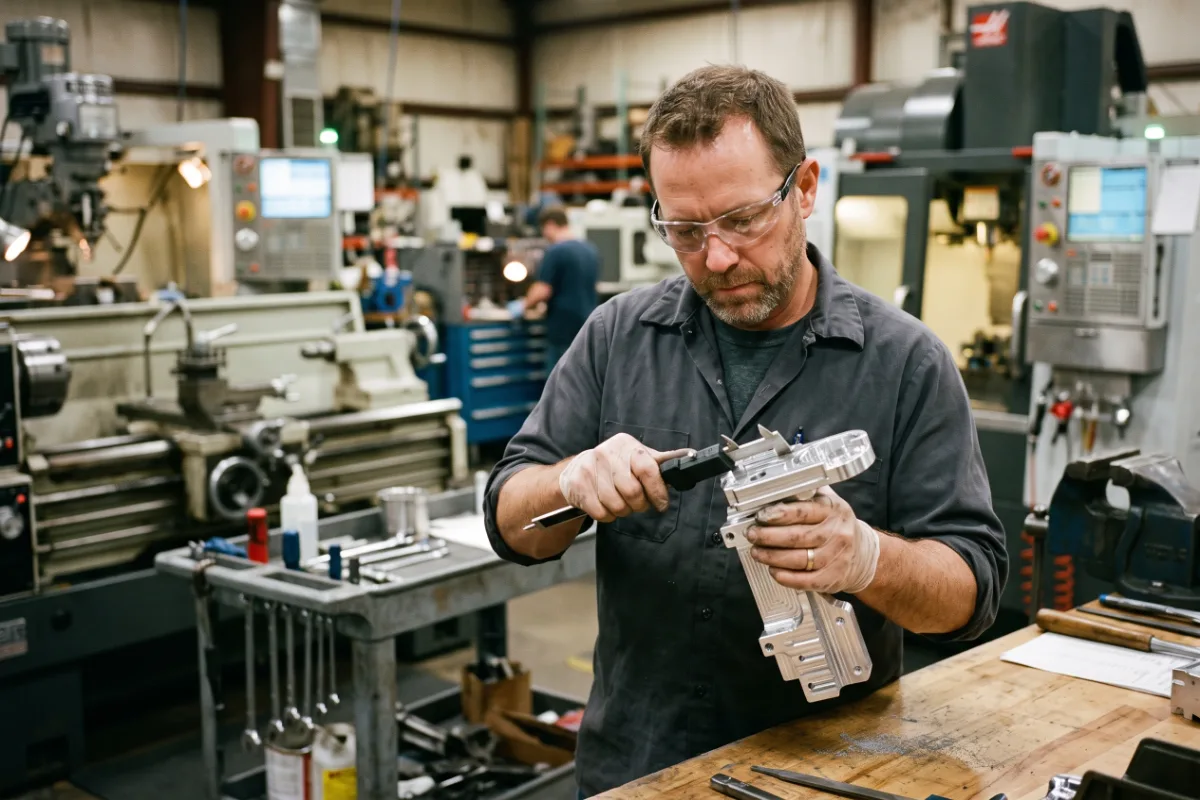
Engineers may check technical fit; sourcing teams may check supply, quality, and risk. The page they land on should answer the question behind the search, then give them a clear next step.
A process or product search needs a page that names the work and the applications it serves.
Real materials, specifications, constraints, and relevant quality documentation help a buyer assess fit. Publish only what the manufacturer can substantiate.
Make the route from a capability or product page to a suitable RFQ or contact path obvious, and track the quality of those inquiries.
These examples show how a search can point to a different page type. Publish only capabilities, specifications, and certifications your technical team can verify.
| Buyer search | Best page job | What proves fit |
|---|---|---|
| Process or capability“precision sheet metal fabrication” | A dedicated capability page | Process, materials, equipment, limits, applications, and a quote path |
| Part or product specification“automatic feeder dimensions” | A product or component page | Verified specifications, variants, documentation, and availability context |
| Application or industry“washdown conveyor for food processing” | An application page | Relevant use cases and links to the products or capabilities behind them |
| Quality or certification“ISO 9001 contract manufacturer” | A capability or quality page | Current, accurate evidence for standards the company actually holds |
| Choice between options“laser cutting vs waterjet” | A comparison or technical guide | Tradeoffs, constraints, and a route to the matching capability |
A downloadable datasheet can support a product page, but the key information should also be readable in HTML. For a fuller operating model, see our manufacturing SEO strategy guide.
The right starting point is the intersection of search demand, buyer intent, competition, and what the company wants to sell. A high-volume phrase is not useful if it attracts the wrong buyer.
Review Search Console queries, current RFQs, sales questions, product catalogs, and technical support language. Add keyword-tool estimates, but treat low-volume technical phrases as a research prompt rather than a rejection.
For each candidate term, inspect the pages Google currently shows: guides, suppliers, product listings, or agencies. Note the information buyers get there and where your first-party expertise can add something useful.
Map one main page to each distinct intent. Link the capability hub to its product, material, application, and evidence pages where those relationships are real; avoid competing pages that repeat the same answer.
This is how our own manufacturing cluster is organized: this page explains the broad approach, the agency page helps with hiring, and the strategy article goes deeper on execution. Equipment-specific work has its own farm equipment marketing page.
Show specific, approved capabilities in crawlable text. Use photos, specifications, and downloadable documents as supporting evidence; do not make the buyer guess what a vague “solutions” page means.
Make related pages reachable with descriptive HTML links. Handle catalog variants and filters deliberately so search engines and buyers reach the pages worth keeping.
Show where to send a drawing or inquiry only when that workflow exists. A useful form and a follow-up process matter more than counting visits that never become qualified conversations.
Track whether the right pages are being found and whether they help real buyers take the next step. Search visibility is a leading signal; a qualified opportunity is a business result.
Relevant query impressions, clicks, and indexed capability or product pages
Views of specifications, product or capability journeys, and useful contact actions
RFQs, inquiry quality, and opportunities matched back to the pages that assisted them
Use Search Console and analytics together, then validate inquiries with sales. A ranking movement or pageview alone does not show that the program brought in the right work.
There is no reliable fixed timeline. The site’s starting condition, competition, implementation pace, and Google’s recrawl all affect when changes appear in search. Set a baseline and review qualified queries and inquiries over time.
Keep useful PDF downloads, but put the key product and capability facts in accessible HTML too. Buyers can then scan, navigate, and reach the next page or quote path.
It depends on how buyers find and evaluate the company. A plant serving a national market may need national product and capability pages, while a local service operation may also need location-focused search coverage.
No. Structured data can clarify content when it accurately matches visible facts, but it cannot replace useful pages, technical accessibility, relevant links, or evidence of capability.
Bring your site and the work you want more of. We’ll discuss what buyers search, which pages you already have, and what deserves a closer audit. The first call is 30 minutes, free, with Shane personally.
Page planning uses current search results, query data, and verified client facts. For search fundamentals, see Google’s people-first content guidance and link guidance. By Shane Perry, Founder + Lead SEO Strategist.